
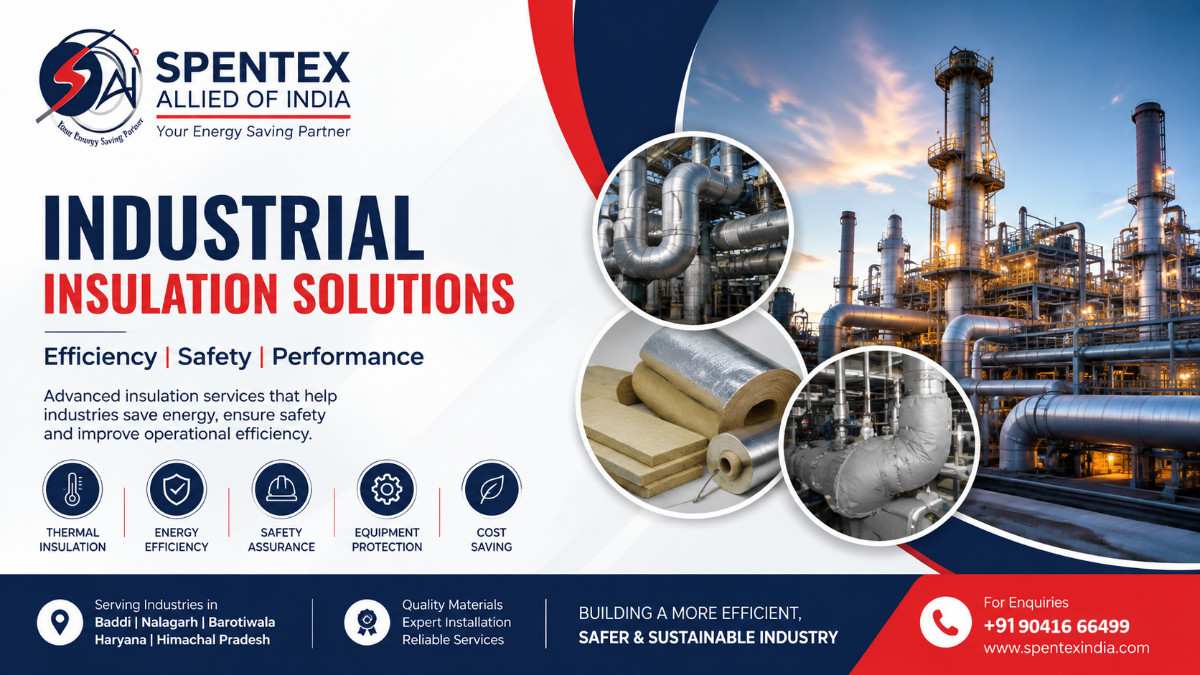
Industrial facilities rely on pipes, tanks, boilers, ducts, equipment and processing systems that often operate at high or low temperatures. Without proper insulation, a significant amount of energy can be lost through these surfaces.
Industrial insulation helps control heat transfer, maintain operating temperatures and protect equipment. It can also contribute to energy efficiency, workplace safety and better overall plant performance.
For industries operating in industrial regions such as Baddi, Barotiwala, Nalagarh and across Haryana and Himachal Pradesh, selecting the right insulation solution can be an important part of maintaining efficient operations.
What Is Industrial Insulation?
Industrial insulation is the process of applying suitable insulating materials to industrial equipment, pipelines, tanks, ducts and other surfaces to reduce unwanted heat transfer.
Depending on the application, insulation may be used to reduce heat loss, prevent heat gain, maintain process temperatures or control surface temperatures.
The right insulation system depends on factors such as operating temperature, equipment type, environmental conditions, moisture exposure and the specific requirements of the industrial process.
Why Is Industrial Insulation Important?
Industrial processes frequently involve heating, cooling or maintaining specific temperatures. Uncontrolled heat transfer can affect process efficiency and increase the energy required to maintain those temperatures.
Proper insulation creates a thermal barrier between the industrial system and its surroundings.
Some important benefits include:
• Reduced heat loss and heat gain
• Improved energy efficiency
• Better temperature control
• Protection of industrial equipment
• Reduced surface temperatures
• Improved workplace safety
• Better process stability
• Potential reduction in operating costs
Industrial Insulation and Energy Efficiency
Energy efficiency is an important consideration for modern industrial facilities. Heat can continuously escape from hot pipes, boilers, tanks and equipment when these surfaces are not adequately insulated.
A properly designed insulation system helps reduce unnecessary heat transfer. This allows industrial systems to maintain their required temperatures with less energy loss.
Over time, effective insulation can support more efficient operation and help industries make better use of their energy resources.
Pipe and Pipeline Insulation
Industrial pipelines are commonly used to transport steam, hot fluids, chilled fluids and other process materials. Temperature changes during transportation can affect the efficiency of the process.
Pipe insulation helps reduce unwanted heat transfer between the pipeline and surrounding environment.
Properly insulated pipelines can help maintain the required operating temperature while also reducing the risk of excessively hot external surfaces.
Equipment and Machinery Insulation
Industrial equipment can generate or operate at elevated temperatures. Heat radiating from exposed equipment surfaces can contribute to energy loss and create uncomfortable or unsafe working conditions.
Equipment insulation helps create a protective thermal barrier around suitable surfaces.
Depending on the application, insulation may be used on processing equipment, vessels, tanks, boilers and other industrial systems.
Thermal Insulation for High-Temperature Applications
Many industrial processes operate at elevated temperatures. Furnaces, boilers, pipelines and process equipment may require insulation materials capable of handling demanding operating conditions.
High-temperature insulation helps minimize heat transfer and maintain thermal stability around the application.
Choosing the appropriate material and installation method is essential because insulation performance depends on the operating environment and temperature requirements.
Cold Insulation and Temperature Control
Insulation is not only used for hot applications. Industrial systems that operate at low temperatures may also require specialized insulation.
Cold insulation can help reduce heat gain from the surrounding environment and assist in maintaining the required temperature of chilled or refrigerated systems.
Proper installation is particularly important in cold applications because moisture and condensation can affect insulation performance.
Acoustic Insulation in Industrial Facilities
Industrial facilities can contain machinery, equipment and processes that generate significant levels of noise.
Where appropriate, acoustic insulation solutions can help reduce the transmission of unwanted sound and contribute to a more comfortable working environment.
The insulation approach depends on the source of the noise, the equipment involved and the surrounding environment.
How Industrial Insulation Supports Workplace Safety
Some industrial surfaces can become extremely hot during operation. Direct contact with these surfaces may create a burn hazard for workers.
Suitable insulation can help reduce the external surface temperature of certain equipment and pipelines.
This makes insulation an important consideration not only for energy efficiency but also for industrial workplace safety.
Choosing the Right Industrial Insulation Solution
Every industrial application has different requirements. Selecting insulation only on the basis of its appearance or initial cost may not provide the desired long-term performance.
Important factors to consider include:
• Operating temperature
• Type of equipment or pipeline
• Required insulation thickness
• Indoor or outdoor installation
• Moisture and environmental conditions
• Mechanical exposure
• Fire and safety requirements
• Expected service life
• Installation conditions
A professional assessment can help determine the most appropriate insulation approach for a particular application.
Why Professional Insulation Installation Matters
Even high-quality insulation materials may not perform properly when they are incorrectly installed.
Gaps, damaged sections, poor joints, inadequate thickness or unsuitable protective finishes can reduce the effectiveness of an insulation system.
Professional industrial insulation services focus on selecting suitable materials, preparing the application correctly and installing the insulation according to the requirements of the system.
Industrial Insulation for Businesses in Baddi, Barotiwala and Nalagarh
Baddi, Barotiwala and Nalagarh are important industrial areas where manufacturing facilities operate across different sectors.
Industrial plants in these regions may use pipelines, processing equipment, tanks, boilers, ducts and other systems where temperature management is important.
Reliable insulation solutions can help such facilities improve thermal efficiency, protect equipment and maintain suitable operating conditions.
Industrial Insulation Solutions Across Haryana and Himachal Pradesh
Industrial insulation requirements are not limited to one industrial area. Manufacturing and processing facilities across Haryana and Himachal Pradesh may require insulation for different applications.
From thermal insulation and pipe insulation to equipment and specialized industrial applications, the correct solution depends on the individual requirements of each facility.
Working with an experienced insulation service provider can make it easier for industries to evaluate their requirements and select an appropriate solution.
Common Industrial Applications of Insulation
Industrial insulation can be used across a wide range of applications, including:
• Process pipelines
• Steam lines
• Boilers
• Storage tanks
• Industrial equipment
• Ducting systems
• Hot and cold process systems
• Manufacturing equipment
• High-temperature applications
• Temperature-sensitive industrial systems
The exact insulation material and installation method should be selected according to the operating conditions and requirements of the application.
How to Maintain Industrial Insulation
Proper maintenance helps an insulation system continue performing effectively over time.
Industries should periodically inspect insulated areas for visible damage, moisture penetration, loose sections, exposed surfaces and deterioration of protective coverings.
Any damaged insulation should be evaluated and repaired where necessary to prevent further performance loss.
Final Thoughts
Industrial insulation is an important part of efficient and safe industrial operations. From reducing unwanted heat transfer to supporting temperature control and protecting equipment, a properly designed insulation system can provide several operational benefits.
For industries in Baddi, Barotiwala, Nalagarh, Haryana and Himachal Pradesh, choosing the right insulation solution should be based on the specific requirements of the plant, equipment and operating conditions.
Professional assessment, suitable insulation materials and proper installation can help industries build insulation systems that support long-term performance and efficiency.
Frequently Asked Questions About Industrial Insulation
What is industrial insulation used for?
Industrial insulation is primarily used to control heat transfer, maintain process temperatures, improve energy efficiency and protect equipment and workers from excessive surface temperatures.
Where is industrial insulation commonly used?
Industrial insulation can be used on pipelines, boilers, tanks, ducts, process equipment, machinery and other industrial systems where temperature or heat transfer needs to be controlled.
Can insulation be used for both hot and cold applications?
Yes. Different insulation systems are designed for hot and cold applications. The appropriate solution depends on operating temperature, environmental conditions and the requirements of the industrial system.
Does industrial insulation help save energy?
Proper insulation can reduce unwanted heat loss or heat gain, which can help industrial systems maintain their required temperatures more efficiently.
Why should industries choose professional insulation services?
Professional installation helps ensure that the insulation system is properly selected and installed. Correct thickness, joints, coverage and protective finishing can all affect the overall performance of an insulation system.