
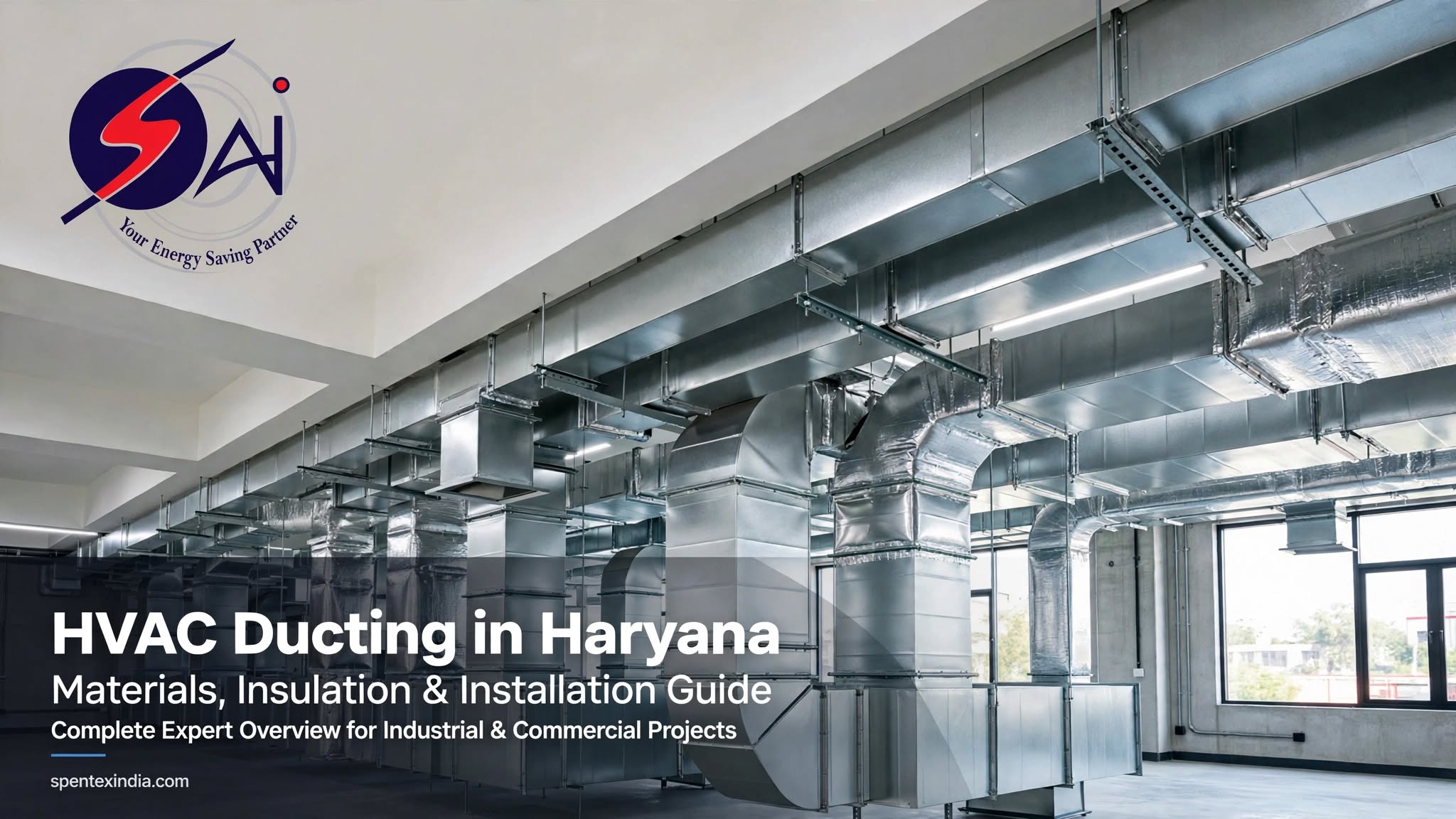
HVAC ducting plays an important role in maintaining indoor comfort, distributing conditioned air and supporting ventilation in commercial and industrial buildings. From offices and hospitals to warehouses, manufacturing facilities and large commercial spaces, a properly planned ductwork system helps move air to the required locations and supports the overall performance of heating, ventilation and air conditioning equipment.
For businesses searching for HVAC ducting services in Haryana, selecting appropriate duct materials, planning airflow routes and addressing insulation requirements are important parts of project planning. Industrial and commercial facilities around Gurugram, Manesar, Faridabad, Panipat and Sonipat may have different ventilation and temperature-control needs depending on their building design, equipment and operating conditions.
This guide explains the main types of HVAC ducting, the factors that influence material selection, the importance of insulation and the common problems that can affect ductwork performance. It also explores how insulation products and related services from Spentex Allied of India may be relevant when planning commercial and industrial HVAC projects.
What Are HVAC Ducting Services?
HVAC ducting services involve work associated with the design coordination, fabrication, installation and performance of ductwork used in heating, ventilation and air conditioning systems. Ducts form the air distribution network that connects HVAC equipment to different areas of a building.
Depending on the project scope, ducting work may include reviewing technical drawings, selecting suitable materials, manufacturing duct sections, installing supports, sealing joints, fitting air distribution components and coordinating insulation requirements. Testing and air balancing may also form part of the project commissioning process.
Different ducts perform different functions. Supply ducts deliver conditioned air, return ducts carry air back towards the HVAC equipment where recirculation is part of the design, and exhaust ducts remove air from designated spaces. Fresh-air ductwork supplies outdoor air according to the ventilation requirements of the building.
Each network must be designed for its intended purpose. Duct dimensions, fittings, pressure losses, air velocity, noise, leakage and access for maintenance all influence the performance of the complete system.
Where Are HVAC Ducting Systems Used?
HVAC ducting is used across a wide range of commercial and industrial environments. The required configuration depends on building size, occupancy, equipment loads, indoor air quality requirements and the processes taking place inside the facility.
Industrial Plants and Manufacturing Facilities
Manufacturing facilities may contain machinery, production lines and work areas that generate heat or require controlled ventilation. Ductwork must be coordinated with the plant layout, structural elements and other building services.
Some industrial processes also require dedicated exhaust, fume extraction or dust collection systems. These should be assessed according to the contaminants involved and the applicable engineering and safety requirements. General HVAC ducting should not automatically be treated as a substitute for specialist process ventilation.
Warehouses and Industrial Sheds
Warehouses often have large floor areas, high ceilings and varying heat loads. Their HVAC requirements depend on building construction, roof heat gain, occupancy, stored materials and the operating conditions that need to be maintained.
Careful duct routing and appropriate insulation can help support the intended air distribution and reduce unwanted heat transfer. The final design should account for the building's actual use rather than relying on a standard layout for every warehouse.
Offices, Hospitals and Commercial Buildings
Offices, hotels, retail buildings and other commercial facilities need air distribution that supports occupant comfort and the intended indoor environment. Healthcare and other specialist facilities may have additional requirements for filtration, fresh-air supply, pressure relationships and ventilation rates.
These factors should be established during system design so that the selected ductwork and associated components are suitable for the building's specific needs.
Types of HVAC Ducting Materials
Ducting materials should be selected according to the application, operating pressure, temperature, environmental exposure, available installation space and project specifications. Cost is an important consideration, but it should not be the only factor determining material suitability.
Galvanized Iron Ducting
Galvanized iron, commonly referred to as GI, is widely used for commercial and industrial air distribution. GI ductwork can be fabricated into rectangular or circular sections, along with the bends, branches, transitions and other fittings required by the system design.
Sheet thickness, reinforcement, joint construction and support spacing should be appropriate for the duct dimensions and operating conditions. Correct fabrication and sealing are important for controlling leakage and maintaining the intended airflow.
Pre-Insulated Ducting
Pre-insulated duct systems combine an air passage with an insulation layer. They may be suitable for certain projects where their construction, mechanical properties, fire performance and installation requirements meet the design specifications.
The selection should consider the intended temperature range, environmental exposure, installation method and maintenance requirements. Pre-insulated ducting is not automatically the best option for every building or industrial application.
Stainless-Steel Ducting
Stainless-steel ductwork may be specified where particular corrosion resistance, cleanability or environmental compatibility is required. Whether it is appropriate depends on the operating environment and the project's technical requirements.
For most projects, material selection should be based on a documented assessment of performance needs rather than choosing a material solely because it is more expensive or appears more durable.
Why HVAC Duct Insulation Matters
Duct insulation helps control heat transfer between the air inside a duct and the surrounding environment. Depending on the system, suitable insulation may support energy performance, help maintain supply-air temperatures and reduce the risk of surface condensation.
For example, when a duct carries cold air through a warm area, heat can enter through the duct walls. If the external surface becomes colder than the surrounding air's dew point, moisture may form on the surface. Suitable insulation and vapour control can help manage this risk when correctly selected and installed.
Insulation requirements vary according to duct temperature, ambient conditions, humidity, duct location, material properties and applicable project specifications. The insulation thickness and finishing system should therefore be established for the actual application.
Rockwool Insulation
Rockwool, also known as stone wool or mineral wool, is used in a variety of thermal and acoustic insulation applications. Depending on the product specification, it may be supplied in forms such as rolls, slabs, pipe sections and lamella-type mats.
For relevant industrial and building applications, explore Rockwool insulation products, Rockwool building rolls and Rockwool slabs. Product suitability for a particular HVAC duct should be confirmed against the project's thermal, acoustic, mechanical and fire-performance requirements.
Glasswool Insulation
Glasswool is another fibrous insulation material used in building services and thermal or acoustic applications. The correct product form and specification depend on the intended installation, operating conditions and required performance.
Learn more about glasswool insulation when assessing insulation options for a suitable building services application. Always check the manufacturer's technical information before selecting a product for ductwork.
Flexible Foam Insulation
Flexible foam materials may be considered for applications where their thermal properties, flexibility and moisture-control characteristics meet the system requirements. Their suitability depends on operating temperature, exposure conditions, fire requirements and the intended installation.
For relevant applications, review nitrile foam insulation sheets and XLPE foam products. These materials should not be treated as interchangeable; selection must be based on the specific product data and the application requirements.
What Is Included in HVAC Ducting Work?
The scope of an HVAC ducting project can vary depending on whether it involves a new installation, replacement of existing ductwork or modification of a running facility. The following stages are commonly considered during project planning.
1. Site Assessment and Design Coordination
The project team reviews the building layout, HVAC equipment, airflow requirements and available installation space. Coordination with structural, electrical, plumbing and fire-safety services helps identify potential clashes before fabrication and installation begin.
Duct sizing and routing should follow the approved engineering design. The design should also consider pressure losses, noise, maintenance access and the locations of diffusers, grilles, dampers and other system components.
2. Duct Fabrication and Material Selection
Duct sections and fittings are manufactured according to the required dimensions and specifications. Material thickness, joint type, reinforcement and connection details should be suitable for the operating conditions.
Before fabrication begins, project stakeholders should confirm the drawings, quantities, material specifications and division of responsibilities between the contractor and other suppliers.
3. Installation, Supports and Joint Sealing
Ductwork must be installed with appropriate supports and clearances. Joints and connections should be sealed using suitable methods to control air leakage. Poor support arrangements, damaged sections or badly sealed joints may affect performance and make future maintenance more difficult.
Routing should also allow access to relevant equipment and components. Coordination at the installation stage can reduce clashes with other building services and limit the need for rework.
4. Insulation and Protective Finishing
Where insulation is required, the material should be suitable for the operating temperature and environmental conditions. Installation details may include insulation thickness, joint treatment, vapour control, protective cladding and the finishing system.
Protective metal finishes may be relevant in exposed or industrial environments, depending on the design. Spentex offers related product categories such as aluminium cladding sheets and GI sheets. The suitability of any cladding material should be confirmed for the intended installation and exposure conditions.
5. Testing and Commissioning
After installation, the project team may inspect duct supports, joints, insulation finishes and connections. Where specified, leakage testing and airflow measurements help verify whether the system meets the required criteria.
Air balancing is also important because a completed duct network does not automatically guarantee that every room receives the intended airflow. Commissioning requirements and acceptance criteria should be established in the project documents.
Important Considerations for HVAC Projects in Haryana
Haryana experiences hot summer conditions and seasonal changes that can influence building cooling loads and insulation requirements. Commercial and industrial facilities around Gurugram, Manesar, Faridabad, Panipat and Sonipat may also have different operating schedules, internal heat loads and ventilation needs.
For a warehouse, the primary concern may be maintaining suitable indoor conditions across a large space. A manufacturing plant may need to account for process heat, equipment layouts and dedicated ventilation requirements. An office building may place greater emphasis on occupant comfort, fresh-air supply and noise control.
These differences affect duct sizing, routing, insulation and the selection of associated components. For cold-air ducts, ambient humidity and the risk of condensation should be considered alongside thermal performance. For exposed installations, the project team may also need to account for mechanical protection, weather exposure and maintenance access.
Businesses planning an installation can review the available HVAC services information and insulation services from Spentex Allied of India to understand the relevant service categories. The precise scope and suitability for a specific project should be confirmed directly before work or procurement is finalised.
How to Choose HVAC Ducting Services in Haryana
Choosing a ducting contractor involves more than comparing prices. The quotation should match the technical requirements of the project and clearly define the work, materials, exclusions and testing responsibilities.
- Review the scope of work: Confirm whether design coordination, fabrication, installation, insulation and commissioning are included or supplied by separate parties.
- Check material specifications: Verify duct material, sheet thickness, fittings and any required insulation details against the approved drawings.
- Discuss installation conditions: Review site access, working height, installation sequence and coordination with other building services.
- Confirm sealing and insulation: Clarify how joints, penetrations, vapour control and protective finishes will be addressed.
- Establish testing requirements: Confirm which inspections, leakage tests, airflow checks and balancing activities are included.
- Compare quotations consistently: Check quantities, exclusions, delivery requirements, installation responsibilities and any additional charges.
It is also useful to agree on a clear communication process between the building owner, HVAC designer, ducting contractor and insulation supplier. This helps ensure that materials are selected against the right specifications and delivered when the installation is ready for them.
Common HVAC Ducting Problems to Avoid
Incorrect Duct Sizing
Ducts that are too small for the required airflow can create excessive pressure losses and noise. Poorly planned oversized sections can increase material and space requirements. Appropriate sizing should follow airflow calculations and the approved design.
Air Leakage
Unsealed joints and poorly fitted connections can allow air to escape from or enter the duct network. Correct fabrication, compatible sealing methods and appropriate inspection help reduce this risk.
Inadequate Insulation
Insufficient or unsuitable insulation can contribute to unwanted heat transfer and, under certain conditions, condensation. Material selection should account for the operating temperature, humidity, fire requirements and installation environment.
Poor Routing and Limited Access
Unnecessary bends, installation clashes and restricted access can complicate the system and make maintenance more difficult. Design coordination and careful installation planning help address these issues.
Incomplete Commissioning
Without appropriate testing and balancing, the system may not deliver the required airflow to every area. Commissioning checks should follow the project's specified requirements and document any necessary adjustments.
How Spentex Allied of India Can Support Your Project
HVAC ducting projects may require more than duct sections and fittings. Depending on the design, they can also involve thermal insulation materials, protective finishes, adhesives and related accessories. Selecting suitable products requires a clear understanding of the application and the relevant technical specifications.
Spentex Allied of India provides product categories and service information relevant to industrial and building insulation requirements. Businesses can explore the product range to review available material categories, or visit the services page for an overview of the services listed by the company.
For projects that require insulation, the material should be selected according to the duct type, operating temperature, moisture exposure, installation conditions and performance requirements. Product availability, technical suitability and the scope of any associated service should be confirmed with the company before procurement.
Providing the project location, application, required quantities and available specifications can help make an enquiry more useful. Where a consultant or HVAC contractor has specified a particular product type or performance requirement, sharing that information can support a more accurate discussion.
To discuss a requirement, visit the Spentex Allied of India contact page. The team can clarify the relevant product or service information for your enquiry and help you identify the next steps based on your project requirements.
Frequently Asked Questions About HVAC Ducting Services in Haryana
What do HVAC ducting services include?
HVAC ducting services may include design coordination, duct fabrication, installation, joint sealing, insulation coordination and commissioning. The exact scope depends on the project and should be confirmed in the contractor's quotation.
Which material is commonly used for HVAC ducting?
Galvanized iron is widely used for commercial and industrial ductwork. Other materials and pre-insulated systems may be appropriate for particular applications. The choice depends on the system design, operating conditions, environmental exposure and project specifications.
Why is insulation important for HVAC ducts?
Insulation helps reduce unwanted heat transfer and can support supply-air temperature control. For cold ducts in warm, humid environments, a properly designed insulation and vapour-control system can also help manage condensation risk.
How much do HVAC ducting services cost in Haryana?
Costs depend on duct dimensions, material thickness, fittings, insulation, installation height, site access and the total scope of work. A meaningful quotation should be based on project drawings, quantities and technical specifications.
How long does HVAC duct installation take?
The timeline depends on the size of the building, the amount of ductwork, fabrication requirements, site readiness, material availability and coordination with other contractors. A realistic schedule can be established after the project scope has been reviewed.
Can Spentex help with insulation materials for HVAC projects?
Spentex Allied of India lists insulation-related products and services that may be relevant to suitable HVAC applications. The exact product suitability, availability and service scope should be confirmed with the company using the project's technical requirements.
Plan Your HVAC Ducting and Insulation Requirements Carefully
A successful HVAC ducting project depends on appropriate design, suitable materials, careful installation, effective joint sealing and proper commissioning. Insulation should also be considered wherever required to manage heat transfer and condensation risks under the actual operating conditions.
For commercial and industrial projects in Haryana, reviewing these factors early can help reduce installation issues and support more informed procurement decisions. Explore the Spentex product range and relevant insulation services to investigate options for your application. For project-specific requirements, contact Spentex Allied of India with the relevant technical details.